Does the Essay Look Like You Wrote It? Teachers Check These 3 Things First

In the age of AI-assisted writing, the line between human-crafted and machine-generated content has become increasingly blurred. For students navigating academic assignments, the challenge isn't just about completing an essay—it's about creating work that authentically reflects your voice, your thinking, and your unique perspective.
But here's the irony: if your AI-assisted essay sounds too perfect, it raises red flags. Teachers are trained to spot the difference, and they're looking for specific markers that distinguish genuine student work from algorithmic output.
So how do you ensure your essay sounds like you wrote it? Let's examine the three critical areas instructors scrutinize most closely.
Part 1: Three Key Techniques for Authentic Essay Writing
1. Does the Introduction Directly Respond to the Assignment?
One of the most obvious tells of AI-generated content is a generic, broad-opening statement that doesn't immediately engage with the specific assignment requirements.
The Problem: AI tools often default to what educators call "thesis pollution"—opening with sweeping statements like "Throughout history, technology has significantly impacted education..." These introductions lack the specificity that professors expect.
The Fix: Get straight to the point. Identify which case, which group, or which specific course concept you're addressing from the very first sentence.
Example of Authentic Introduction:
"This essay examines how TikTok study content shapes the daily routines of international students at Australian universities, focusing specifically on the tension between entertainment algorithms and academic time management."
Notice how this introduction immediately narrows the scope—no fluff, just substance.
2. Does Each Paragraph Contain Active "Moves"?
A paragraph that's just a summary of reading material is a dead giveaway. Strong academic writing demonstrates that you're doing something with the information—comparing, questioning, challenging, or connecting ideas.

The Problem: AI often produces what looks like well-structured summaries: "Author A argues X. Author B argues Y. Author C argues Z." Without additional commentary, these become encyclopedia entries rather than analytical essays.
The Fix: After presenting information, follow up with interpretive moves:
- Compare: "This differs from Smith's earlier work because..."
- Explain: "This matters because it suggests that..."
- Question: "However, this raises questions about..."
- Connect: "This aligns with what we observed in Week 3's case study, but..."
Example of a Paragraph with Movement:
"Johnson (2023) argues that social media algorithms prioritize engagement over educational value. This contrasts sharply with Chen's finding that students actively curate their feeds for study content. This tension matters because it suggests the relationship between TikTok and academic performance may be more nuanced than critics suggest. However, this finding only applies when students have developed sufficient digital literacy to distinguish between content types."
3. Does the Conclusion Acknowledge Limitations?
AI-generated conclusions often fall into the trap of restating everything without advancing the argument. The result? A conclusion that feels repetitive and, frankly, mechanical.
The Problem: A typical AI conclusion reads like this: "In conclusion, this essay has examined X, explored Y, and demonstrated Z. Therefore, the findings are significant."
The Fix: Leave your reader with something—a boundary, a caveat, a direction for future research. Genuine academic thinking recognizes that knowledge is provisional.
Example of a Conclusion with Boundaries:
"This analysis helps explain the classroom dynamics observed in the case study, but it may not fully apply to students from significantly different linguistic or cultural backgrounds. Future research should consider how home-country educational norms influence students' expectations of platform-based learning. Nonetheless, the correlation between algorithmic content selection and reported study stress warrants further investigation."
A Final Note: Embrace Imperfection
Here's an important insight: if every paragraph reads like a perfect template answer, your essay might actually appear less authentic. Real student work includes:
- Some hedging ("This might suggest...")
- Occasional direct assertions ("This clearly demonstrates...")
- Acknowledgment of trade-offs ("While X offers advantages, Y presents challenges...")
Let your essay show that you've made choices, considered alternatives, and thought carefully about scope. That human touch—the intellectual struggle captured on the page—is exactly what instructors are looking for.
Part 2: Using Humanize Tools to Enhance Authenticity
While the techniques above require genuine effort and skill development, the reality is that many students are using AI assistance and want their final work to sound more natural. This is where Humanize tools come into play.
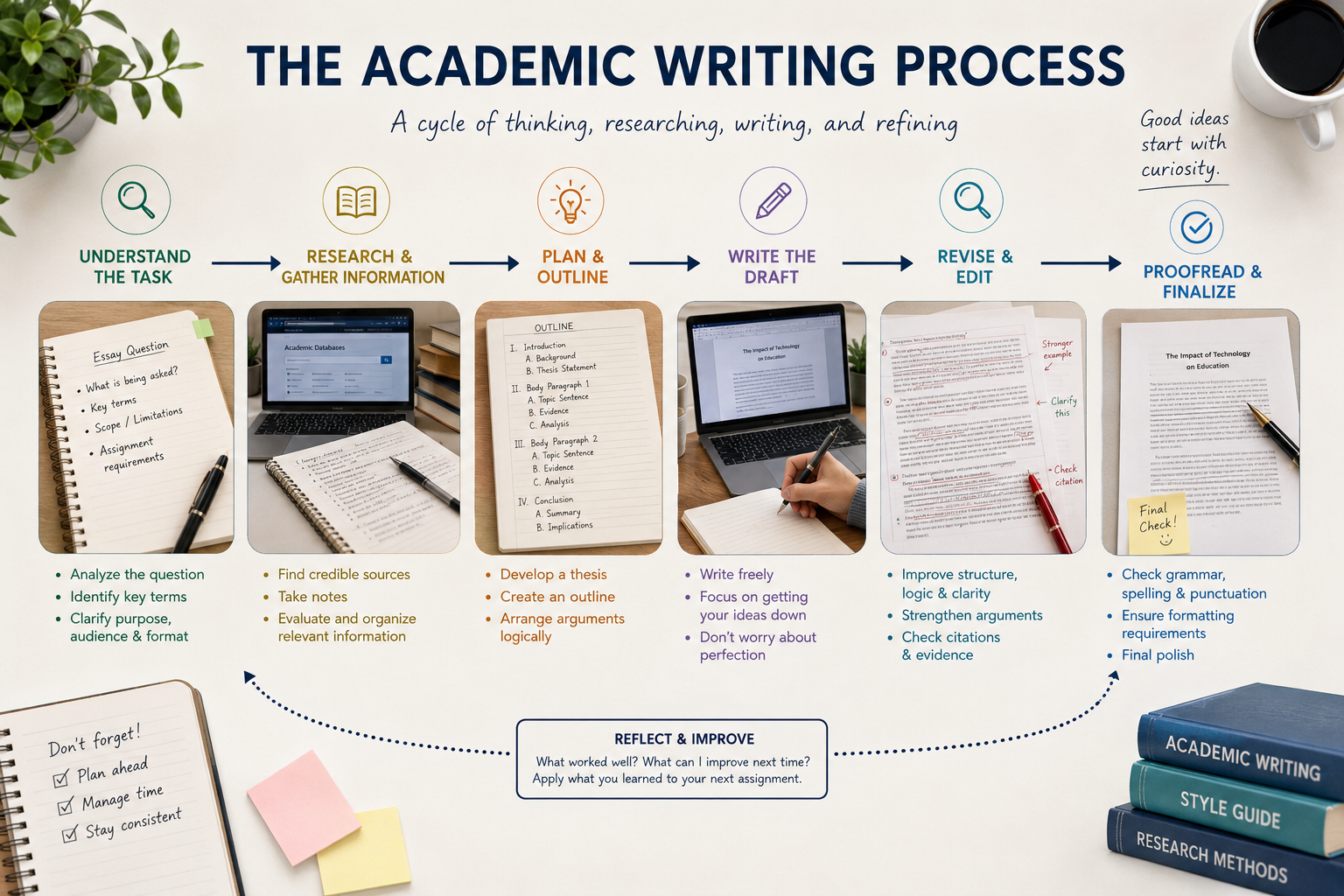
What Are Humanize Tools?
Humanize tools are AI-powered platforms designed to refine and adjust AI-generated text to sound more natural, conversational, and human-written. These tools work by:
-
Removing formulaic patterns – AI often uses repetitive structures like "Firstly... Secondly... Lastly..." Humanize tools vary sentence openings and transitions.
-
Adding conversational markers – Phrases like "It turns out that..." or "Interestingly..." make writing feel less robotic.
-
Adjusting vocabulary distribution – AI tends to overuse sophisticated words. Humanize tools introduce more common alternatives without dumbing down the content.
-
Introducing intentional imperfections – Small variations in sentence length and structure mimic natural human writing patterns.
Popular Humanize Tools to Consider
Several tools have emerged to address the AI-human text gap:
- Undetectable.ai – Focuses on making AI content pass AI detection while maintaining readability
- StealthWriter – Specializes in academic-style writing with natural flow
- Word Spinner – Offers customization for different writing styles and tones
Important Caveats
However, using Humanize tools isn't a substitute for genuine engagement with your material. Here's why:
They're supplements, not replacements. The best approach combines AI assistance with personal editing. Use AI to help generate ideas and structure, then infuse your own voice through revision.
Quality varies. Not all Humanize tools produce equally natural results. Test different options and always review the output yourself.
Ethical considerations matter. Always check your institution's policy on AI assistance. Some schools permit AI use for brainstorming, while others have stricter guidelines.
The goal is authenticity, not deception. Using these tools to appear as though you wrote everything yourself crosses ethical lines. Use them to enhance clarity and naturalness, not to misrepresent your work.
Best Practices for Using Humanize Tools
- Start with your own notes – The more input you provide, the more "you" the output will feel
- Review and edit – Don't accept the humanized version without reading it
- Add personal examples – Insert your own experiences or course-specific references
- Check for accuracy – Ensure the tool hasn't introduced factual errors
- Adjust tone – Match the output to your assignment requirements and personal voice
Remember: the most effective essays combine AI efficiency with human insight. Think of Humanize tools as a bridge between technological capability and authentic expression—not a shortcut around doing the hard intellectual work yourself.
Part 3: Essay TurnDetector – Self-Validation Before Submission
Before you submit that essay, there's one more crucial step: running it through an AI detection tool. This isn't about gaming the system—it's about ensuring your work represents your best effort and meets academic standards.
Why Self-Validation Matters
Understanding detection mechanisms helps you write better. When you know what these tools look for—repetitive sentence structures, overuse of certain connectors, unnaturally perfect grammar—you can consciously avoid these patterns in your original writing.
Catching issues early saves you from potential academic consequences. Discovering your essay flags as "AI-generated" after submission is far worse than finding out during revision.
Building authentic skills means you eventually won't need AI assistance at all. Understanding the gap between AI-written and human-written text helps you develop genuine academic writing capabilities.
How TurnDetector and Similar Tools Work
AI detection tools analyze text patterns that typically indicate machine generation:
| Feature Analyzed | AI Indicator | Human Counterpart |
|---|---|---|
| Sentence structure | Uniform length and complexity | Varied rhythm and length |
| Vocabulary | High-frequency sophisticated words | Natural word distribution |
| Transitions | Formulaic connectors | Contextual, varied transitions |
| Content focus | General, surface-level analysis | Specific, deeper engagement |
| Error patterns | None or very few | Occasional imperfections |
Steps for Effective Self-Checking
1. Complete your draft first Don't check until you've finished writing. Mid-draft checking interrupts your creative flow and leads to fragmented, inconsistent work.
2. Run multiple detection tools Different platforms use different algorithms. Tools like GPTZero, GPTZero, and Copyleaks may give varying results. Check across platforms to get a comprehensive view.
3. Review flagged sections Highlighting doesn't mean your essay is "bad"—it means certain passages might need revision. Focus on paragraphs with heavy AI assistance.
4. Apply humanizing techniques Revise flagged sections using the techniques from Part 1—add your own interpretations, vary sentence structures, and insert personal connections.
5. Check readability scores AI-generated text often scores unnaturally high on readability metrics. If your essay has a Flesch-Kincaid score that's "too perfect," consider adding some natural complexity.
Balancing Detection Avoidance with Academic Integrity
Here's a critical point: the goal of self-checking isn't to fool detection tools—it's to produce authentic work.
Detection tools evolve constantly. What works today may not work tomorrow. Building genuine writing skills is the only sustainable strategy.
Ask yourself: - Does this essay reflect my understanding of the material? - Have I added my own analysis and perspective? - Would I be comfortable discussing every paragraph in person? - Is the work I've submitted truly representative of my abilities?
If the answer to any of these questions is "no," that's your signal to invest more personal effort—not just to run your essay through another tool.
Conclusion: The Human Touch in AI-Assisted Writing
Writing authentically in the age of AI isn't about rejecting technology—it's about using it strategically while maintaining your unique voice. The three areas we've examined:
- Assignment-specific openings ensure you're directly engaging with what's asked
- Active paragraph moves demonstrate genuine analytical thinking
- Concluding boundaries show sophisticated understanding of knowledge limitations
Combined with thoughtful use of Humanize tools and diligent self-checking through TurnDetector and similar platforms, you can produce essays that not only pass scrutiny but genuinely reflect your intellectual growth.
Remember: tools can help you write, but only you can think. The best essays combine technological assistance with human insight, creating work that's greater than either could produce alone.
Your voice matters. Let it come through.
What techniques do you use to make your essays sound more authentic? Share your thoughts in the comments below.