Master the Art of Essay Writing: A Proven Framework for Academic Success
Introduction
Let's be honest: staring at a blank page with an essay deadline looming is one of the most stressful experiences in academic life. Whether you're a freshman just starting your university journey or a senior perfecting your thesis, the struggle to craft a compelling essay is universal. But here's the good news—essay writing isn't about innate talent; it's about mastering a formula.
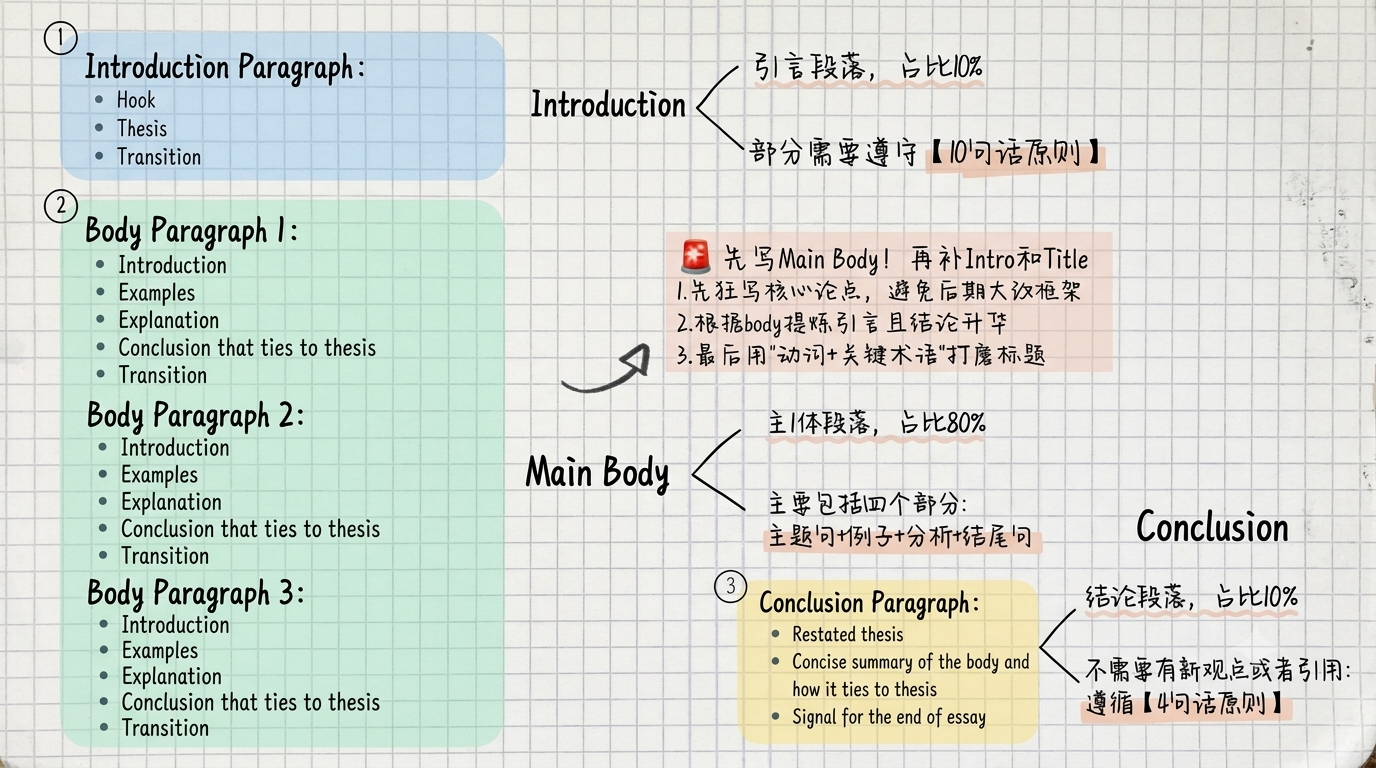
In this guide, I'll reveal the hidden techniques that top students use to write outstanding essays efficiently. The key formula? Hook + Thesis + Transition for your introduction, a rigorous Topic Sentence → Example → Analysis → Conclusion structure for each body paragraph, and a punchy 4-sentence summary to seal your argument. Here's the biggest secret: write your Main Body first, then come back to write your introduction last. Trust me—your essay will flow more logically, your thesis will be sharper, and your conclusion will pack more punch.
The Hidden Secret: Write Your Main Body First
Why the Traditional Approach Fails
Most students start with the introduction, painstakingly crafting the "perfect hook" and "clear thesis statement"—only to abandon half of it once they realize where their argument actually leads. This wastes time and creates frustration. The solution? Flip the script.
The Reverse Writing Method
- Start with your body paragraphs: Write out your three (or more) main arguments with supporting evidence and analysis
- Extract your thesis: Look at your body paragraphs and ask yourself—"What is the ONE thing I'm proving?"
- Craft your hook from your conclusion: Your final insight becomes the attention-grabbing opening
- Add transitions: Connect your introduction to your body seamlessly
This approach ensures your entire essay serves a clear, unified purpose. You know exactly what you're arguing before you promise it to your reader.
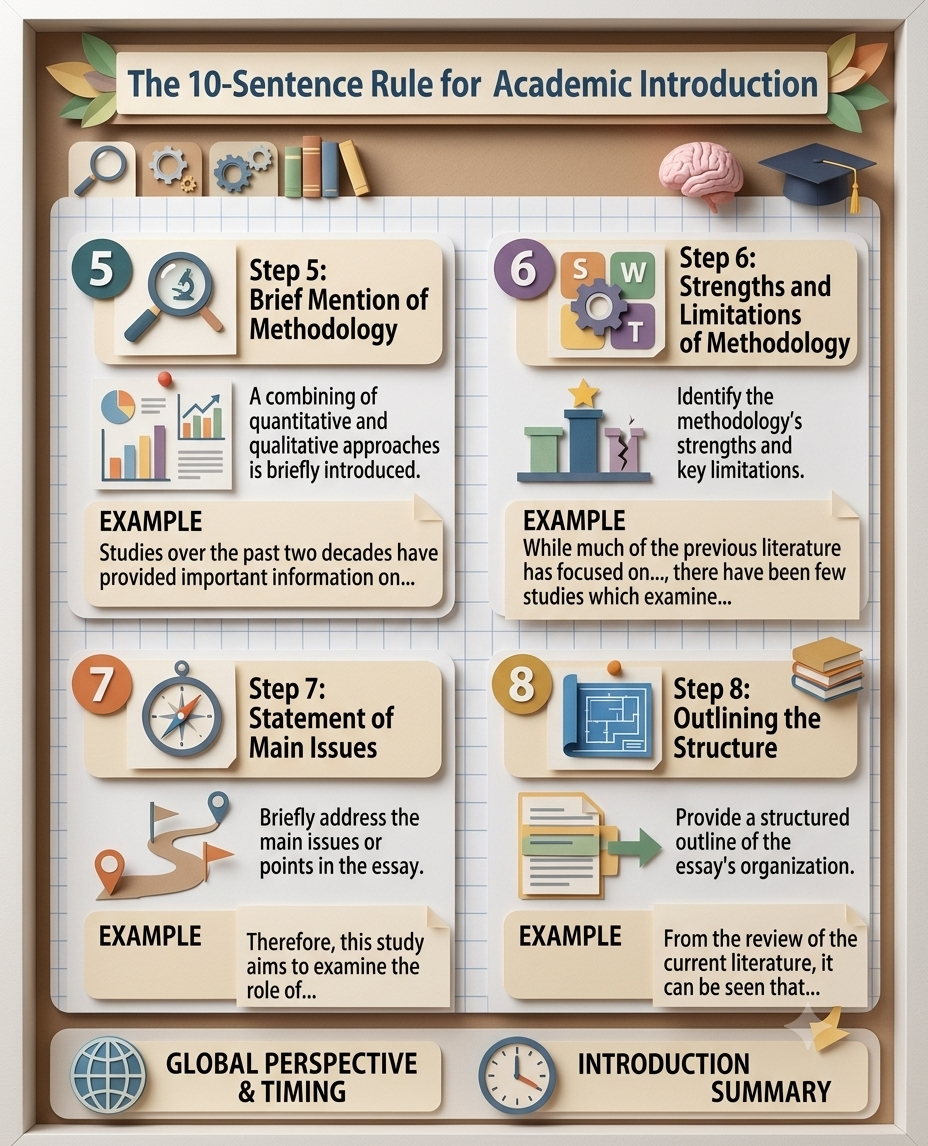
Introduction Formula: Hook + Thesis + Transition
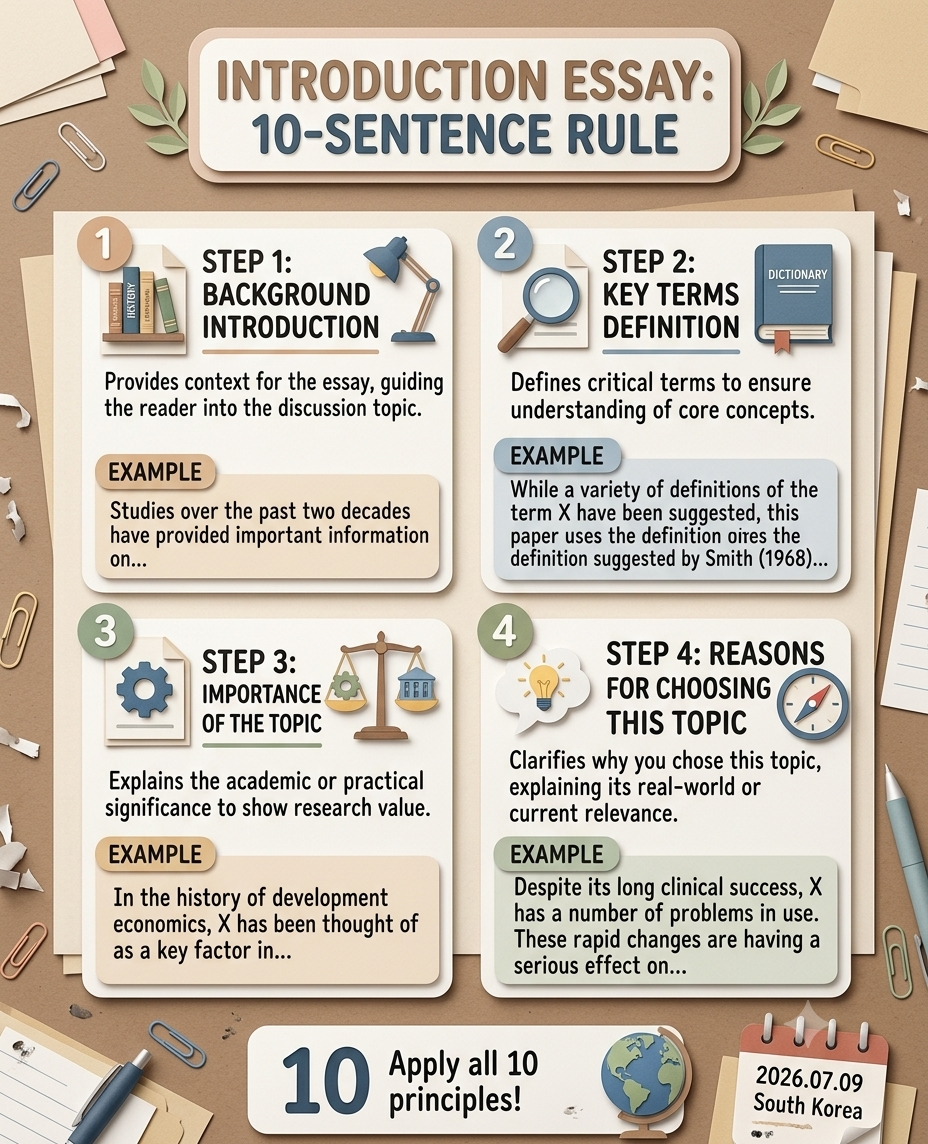
Your introduction is your first impression—make it count. Follow this proven formula:
The Hook (1-2 sentences)
Your opening must grab attention immediately. Avoid generic statements like "Throughout history..." Instead, try: - A surprising statistic or fact - A thought-provoking question - A vivid, relevant anecdote
The Thesis (1 sentence)
This is the heart of your essay. A strong thesis is: - Specific: Not "Social media affects society" but "Social media reshapes political engagement among Gen Z voters" - Argueable: Someone could reasonably disagree - Focused: One clear main point
The Transition (1-2 sentences)
Guide your reader into your first body paragraph. Preview your supporting points without giving everything away.
Pro tip: After writing your entire essay, revisit your introduction and ensure it still matches your actual argument. Many students discover their thesis has evolved!
Main Body: The PEEL Framework (At Least 3 Paragraphs)
Each body paragraph should follow the PEEL structure—Point, Evidence, Explain, Link:
Point (Topic Sentence)
Start with a clear, focused statement that supports your thesis. This sentence should: - Introduce the paragraph's main idea - Connect back to your thesis - Be specific and arguable
Evidence (Examples)
Support your point with concrete evidence: - Statistics and research findings - Quotes from experts or primary sources - Real-world examples and case studies
Critical: Always cite your sources properly! Academic integrity is non-negotiable.
Explain (Deep Analysis)
This is where average essays become exceptional. Don't just present evidence—analyze it: - How does this evidence support your point? - Why does this matter? - What are the implications or larger significance?
Link (Conclusion of Paragraph)
Tie your paragraph back to your thesis and transition smoothly to your next point. This creates cohesion and prevents your essay from feeling like a collection of unrelated ideas.
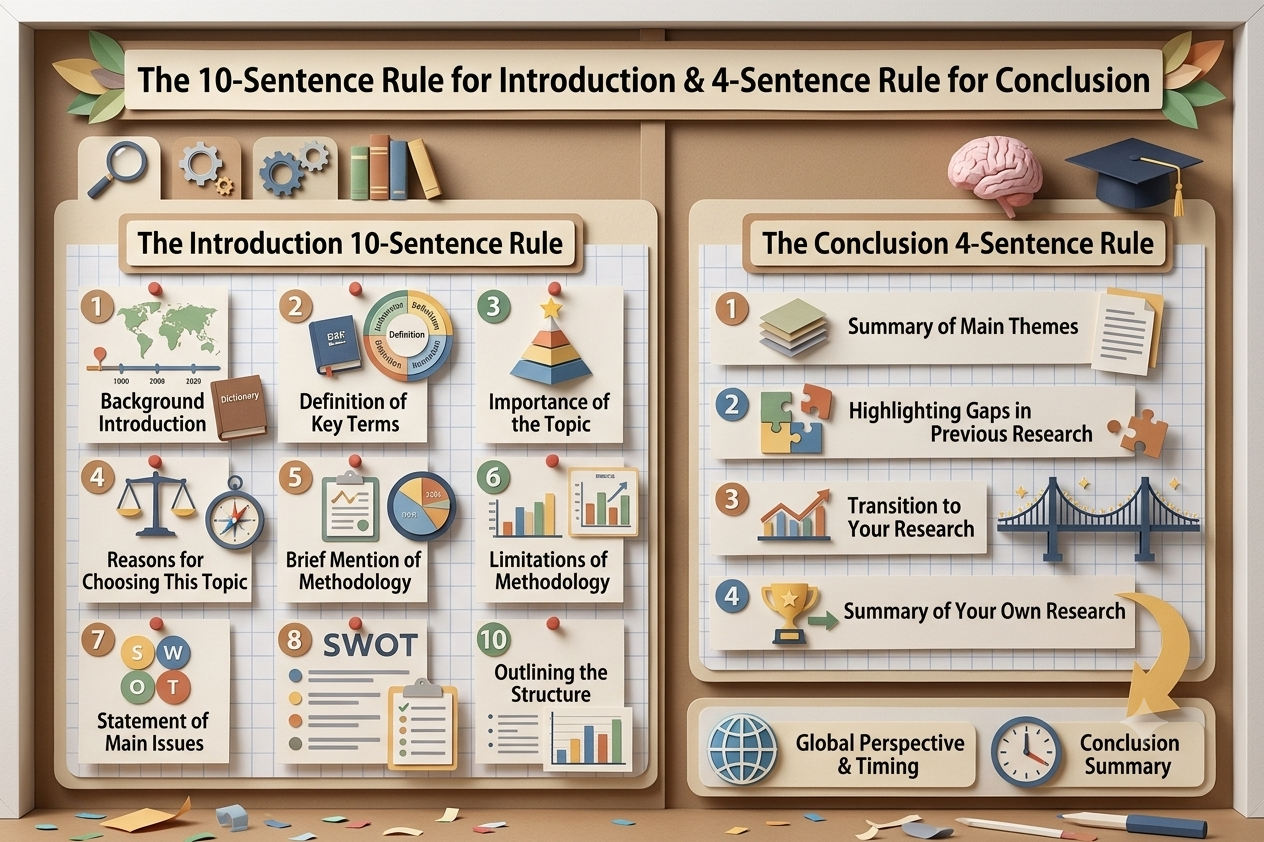
The 4-Sentence Conclusion: End with Impact
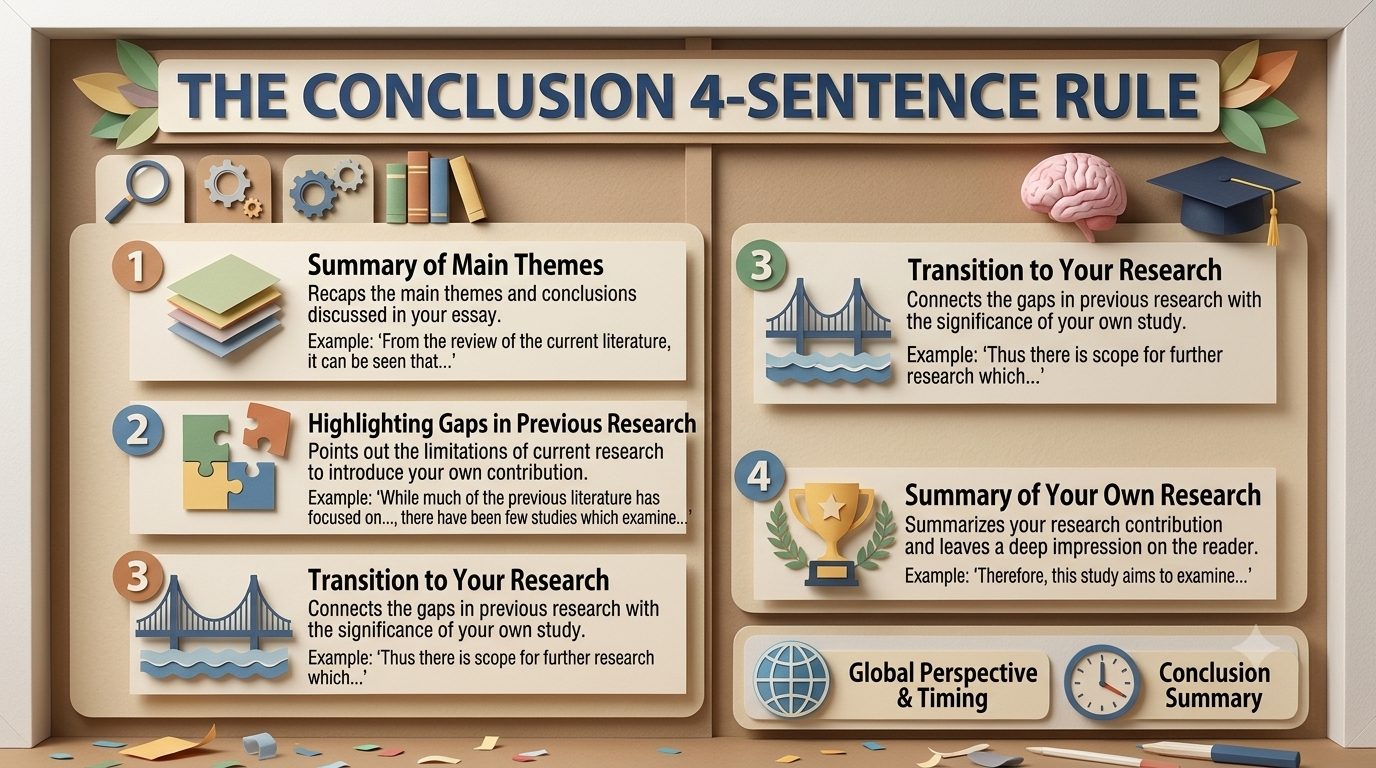
Your conclusion isn't a summary—it's your final persuasive moment. Use exactly four sentences:
- Restate your thesis in fresh language (don't copy-paste)
- Synthesize your main points—show how they work together
- Zoom out—connect your argument to broader implications
- End memorably—a call to action, rhetorical question, or powerful statement
Avoid these common mistakes:
- ❌ Introducing new arguments
- ❌ Starting with "In conclusion..."
- ❌ Simply repeating your introduction
- ❌ Apologizing for limitations ("This essay only scratches the surface...")
Title Power: Use Action Verbs + Keywords
Your title is the first thing readers see—and often the deciding factor in whether they read your essay. Follow this formula:
Action Verb + Keywords + Specific Focus
Instead of: "Essay on Climate Change"
Try: "Combating Carbon Emissions: How Urban Green Spaces Reduce Climate Impact"
The second title is specific, uses an action verb ("Combating"), and promises a clear focus.
Final Checklist: Before You Submit
- ✅ Thesis is clear, specific, and arguable
- ✅ Each body paragraph follows PEEL structure
- ✅ All evidence is properly cited
- ✅ Transitions connect ideas smoothly
- ✅ Conclusion restates thesis without copying
- ✅ Title uses action verbs and keywords
- ✅ No new arguments in conclusion
- ✅ Proofread for grammar and style
Conclusion
Essay writing is a craft that improves with practice and the right framework. Remember: write your body first, extract your thesis second, craft your introduction third, and save your conclusion for last. Use the PEEL method for each paragraph, keep your thesis laser-focused, and end with impact. These techniques aren't just tips—they're the foundation of every successful academic essay. Now go write something remarkable!
About the Author: This guide is brought to you by an experienced Essay Tutor dedicated to helping students unlock their academic potential through practical, evidence-based writing strategies.
Would you like me to make any adjustments to this blog post, such as adding more examples, expanding certain sections, or modifying the tone?