ZeroGPT Review: The Ultimate Guide to AI Content Detection in 2026
Let's be real for a second: we live in a world where AI-generated content is everywhere. From blog posts to academic papers, from marketing copy to social media updates—AI is churning out text at an unprecedented rate. And here's the million-dollar question: How do we know what's human-written and what's machine-produced?
That's where AI content detectors come into play, and ZeroGPT has been making waves as one of the most popular options on the market. In this comprehensive review, we're going to dig deep into what ZeroGPT offers, how it actually performs in the real world, and whether it's worth your time in 2026.
What Exactly is ZeroGPT?
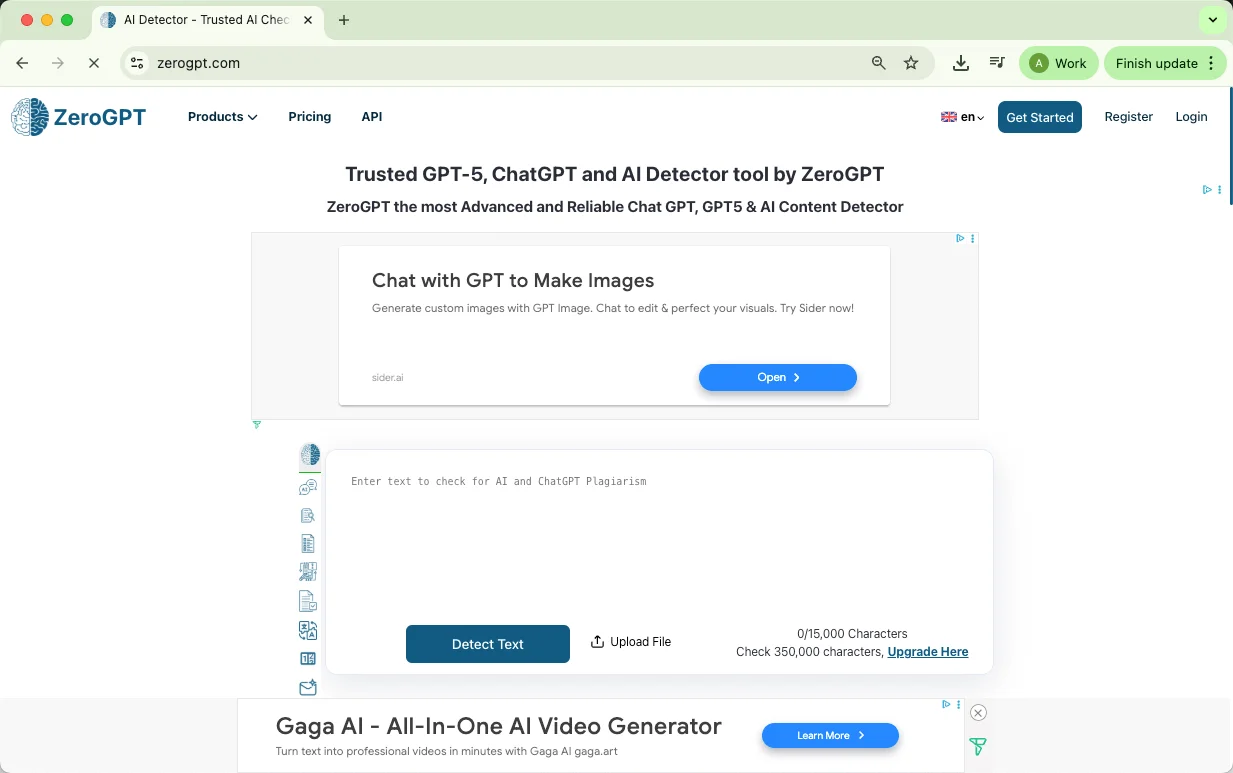
ZeroGPT is an online AI detection tool accessible at zerogpt.com that promises to identify content generated by popular AI models including ChatGPT, GPT-4, GPT-5, Gemini, Claude, and others. Marketed as "the most advanced and reliable ChatGPT, GPT-5 & AI Content Detector," it's positioned itself as a go-to solution for educators, content creators, students, and publishers who need to verify the authenticity of written material.
But here's the thing—claiming to detect AI content and actually doing it well are two very different things. Let's find out where ZeroGPT actually stands.
How Does ZeroGPT Actually Work?
At the core of ZeroGPT lies something called DeepAnalyse™ Technology—a multi-stage deep learning system specifically designed for AI content detection. Unlike those basic rule-based checkers that just look for keywords, DeepAnalyse™ analyzes text at both macro and micro levels.
Here's what that means in practice:
- Linguistic pattern analysis: How words and phrases are structured
- Sentence structure evaluation: Looking at rhythm and flow
- Vocabulary predictability: Measuring how "expected" certain word choices are
- Coherence checking: Assessing overall logical flow
The system was trained on an enormous dataset containing real human-written texts from across the internet, combined with synthetic datasets generated by various LLMs. This training helps ZeroGPT recognize what they call "fingerprints" of AI writing—things like:
- Overly uniform sentence rhythms
- Repetitive phrasing patterns
- Unnaturally consistent "burstiness" (or lack thereof)
Fun fact: Humans naturally vary their sentence length and complexity. AI tends to smooth everything out. That's one of the key differences ZeroGPT is trying to catch.
The detection process works in stages: first, it flags potential AI traits through probabilistic classification, then performs deeper forensic analysis cross-referencing against known human versus machine writing patterns. This dual approach is designed to minimize both false positives (wrongly flagging human text as AI) and false negatives (missing AI content).
ZeroGPT's Feature Set: More Than Just Detection
One thing that sets ZeroGPT apart from the competition is how it's evolved from a basic AI checker into a full content workflow platform. Here's what's included:
Core Features:
- AI/GPT Detector: The flagship tool, supporting up to 350,000 characters in the free tier. Delivers instant results with sentence-level highlighting and downloadable PDF reports.
- AI Humanizer: Transforms AI-generated text into more natural-sounding prose while preserving the original meaning
- AI Image Detector: A newer addition that analyzes visuals to determine if they were created by tools like DALL·E or Midjourney
- Plagiarism Checker: Scans against billions of web sources for duplicate content
Additional Utilities:
- AI Paraphraser
- Summarizer
- Translator (supports all languages)
- Grammar Checker
- Word Counter (with keyword density and reading time estimates)
- Dictionary
- Citation Generator
- AI Email Helper
Chat Integration:
ZeroCHAT brings human-like AI assistance to WhatsApp and Telegram for on-the-go detection, summarization, or paraphrasing tasks.
For Developers:
An API integration allows these functions to be embedded into custom applications, with batch file uploads and automated reporting available in premium plans.
Pricing:
The freemium model includes: - Free version: Basic needs coverage (up to 15,000 characters per check) - MAX/EXPERT subscriptions: Unlimited access, PDF exports, and priority support
The Real Test: How Accurate is ZeroGPT?
This is where things get interesting—and a bit controversial.
ZeroGPT claims "high accuracy" with rates exceeding 98% in controlled conditions, citing training on over 10 million texts. Some early evaluations reported near-perfect 100% accuracy on test sets after the tool matured.
However, 2025-2026 independent testing tells a more nuanced story:
| Test Scenario | Accuracy |
|---|---|
| Pure AI content (GPT-4/5) | Near 100% |
| Mixed human-AI content | ~80% |
| Academic essays (human-written) | Inconsistent |
| Short texts (<300 words) | Higher error rate |
Real-world testing revealed: - ~80% accuracy for mixed content like blogs and articles - 25% false-positive rate on human-written text (rising to 58% when including "partly AI" flags) - Heavily edited or academic pieces proved particularly challenging - The tool sometimes flagged polished human writing as 100% AI-generated
The Bottom Line: ZeroGPT works great for catching obvious AI content but struggles with hybrid human-AI text, paraphrased material, and formal academic writing. For high-stakes applications, you'll want to combine it with human judgment or cross-check tools.
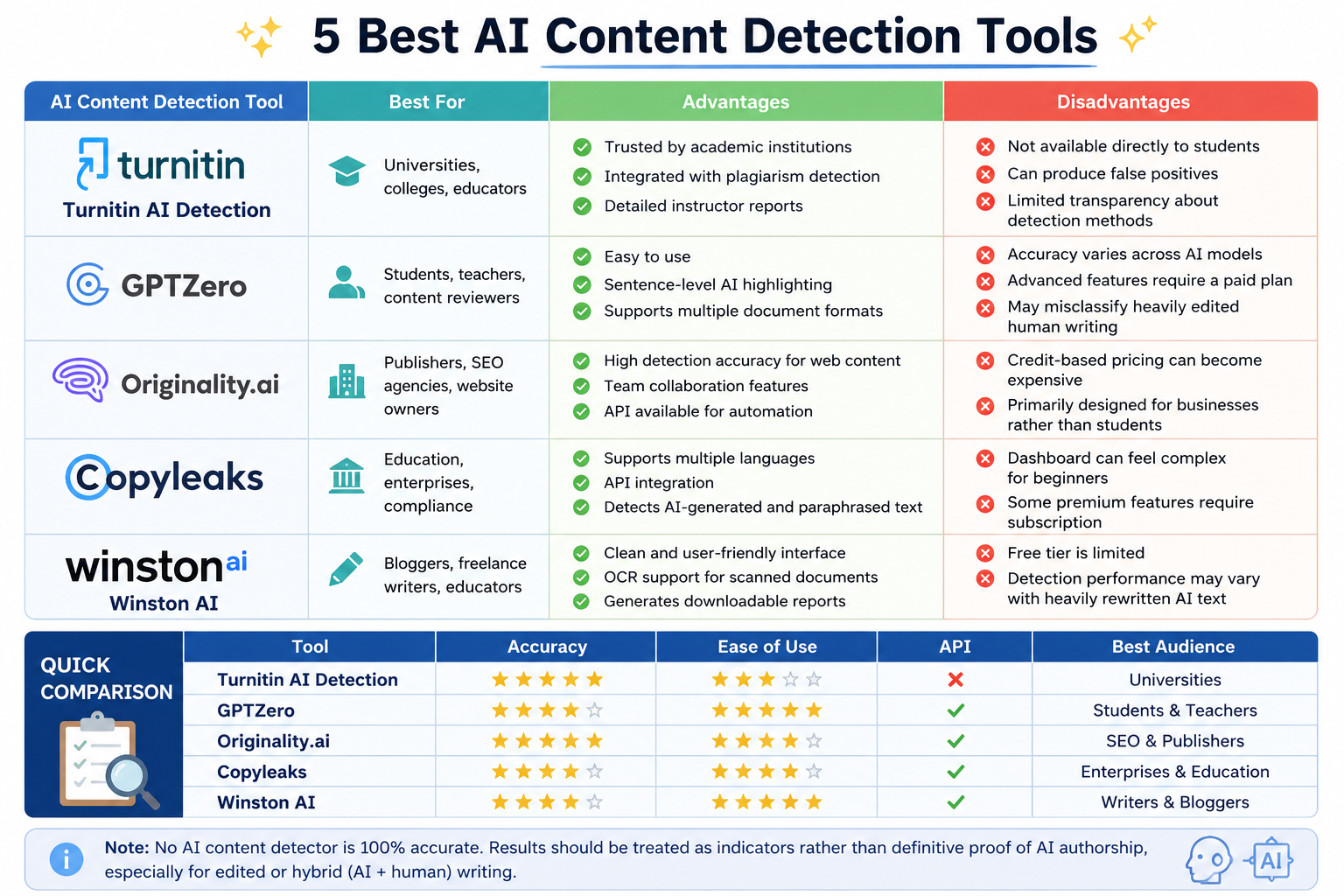
ZeroGPT vs. The Competition
How does ZeroGPT stack up against the AI detection giants?
GPTZero
Often considered the accuracy leader, GPTZero achieves approximately 99% detection rates with extremely low false positives (around 1-2%). It excels in educational settings with sentence-level highlighting and plagiarism integration. For hybrid and paraphrased content, GPTZero significantly outperforms ZeroGPT.
Winner for: Precision, transparency, and academic use
GPTZero
The institutional heavyweight with 98% accuracy and under 1% false positives for texts over 300 words. However, it's only available to institutions—no individual access.
Winner for: School-wide academic integrity enforcement
Copyleaks & Winston AI
Both offer 99%+ accuracy claims with strong multilingual support, though Copyleaks leans enterprise while Winston AI targets publishers.
Should You Use ZeroGPT in 2026?
The Verdict: ZeroGPT remains a strong, user-friendly contender in the AI detection space. Here's when to use it:
✅ Great for: - Quick personal content checks - Bloggers and freelancers verifying authenticity - Casual users needing an accessible starting point - Those wanting extra tools (humanizer, paraphraser, etc.)
⚠️ Not ideal for: - High-stakes academic submissions - Legal or professional verification - When absolute precision is required
My recommendation: Treat ZeroGPT as one tool in your toolkit, not the definitive answer. For critical applications, supplement with human review or use multiple detection tools.
Final Thoughts
In the ever-evolving cat-and-mouse game between AI generators and detectors, ZeroGPT has carved out a solid niche as an accessible, feature-rich option for everyday use. While it may not be the gold standard for high-stakes academic or professional verification, it offers excellent value—especially given the generous free tier.
As AI models continue to advance, no detector will ever be perfect. But with continuous updates and expanding features like image detection, ZeroGPT is positioning itself to remain relevant in this rapidly changing landscape.
Ready to try it? Head to zerogpt.com and run your first check. Just remember: the best approach is always to combine technology with good old-fashioned human judgment.